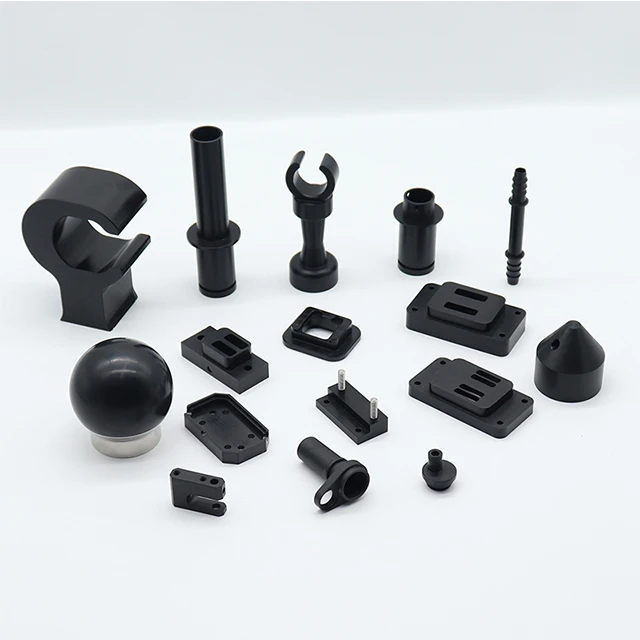
Polyimide plastic
Polyimide (abbreviated as PI) refers to a class of polymers containing an imide ring (-CO-NR-CO-) [2] on the main chain, and is one of the organic polymer materials with the best comprehensive properties. . Its high temperature resistance is above 400 °C, the long-term use temperature range is -200 ~ 300 °C, some parts have no obvious melting point, high insulation performance, dielectric constant 4.0 at 103 Hz, dielectric loss is only 0.004 ~ 0.007, belongs to F to H class insulation.
According to the chemical structure of the repeating unit, polyimides can be divided into three types: aliphatic, semi-aromatic and aromatic polyimides. According to the interaction force between chains, it can be divided into cross-linked and non-cross-linked [1] .
As a special engineering material, polyimide has been widely used in aviation, aerospace, microelectronics, nano, liquid crystal, separation membrane, laser and other fields. In the 1960s, all countries listed the research, development and utilization of polyimide as one of the most promising engineering plastics in the 21st century. Polyimide, because of its outstanding characteristics in performance and synthesis, whether as a structural material or as a functional material, its huge application prospects have been fully recognized, and it is known as a "problem-solving expert" ( problem solver), and believed that "there would be no microelectronics technology today without polyimide".
PI polyimide characteristics:
(1) Parts with low friction coefficient and wear resistance under high speed and high pressure;
(2) Parts with excellent creep resistance or plastic deformation;
(3) Parts with excellent self-lubricating or oil-lubricating properties;
(4) Liquid sealing parts under high temperature and high pressure;
(5) Parts with high bending, tensile and impact resistance;
(6) Corrosion-resistant, radiation-resistant and rust-resistant parts;
(7) Parts whose long-term use temperature exceeds 300°C and short-term 400~450°C;
(8) High temperature resistant (over 260°C) structural adhesives (modified epoxy resins, modified phenolic resins, modified silicone adhesives, etc., where the temperature resistance does not exceed 260°C);
(9) Microelectronic packaging, stress buffering protective coating, interlayer insulation of multi-layer interconnection structure, dielectric film, chip surface passivation, etc.
contact:Penny Peng
sales2@ruixing-mfg.com
ShenZhen ruixing precision MFG