


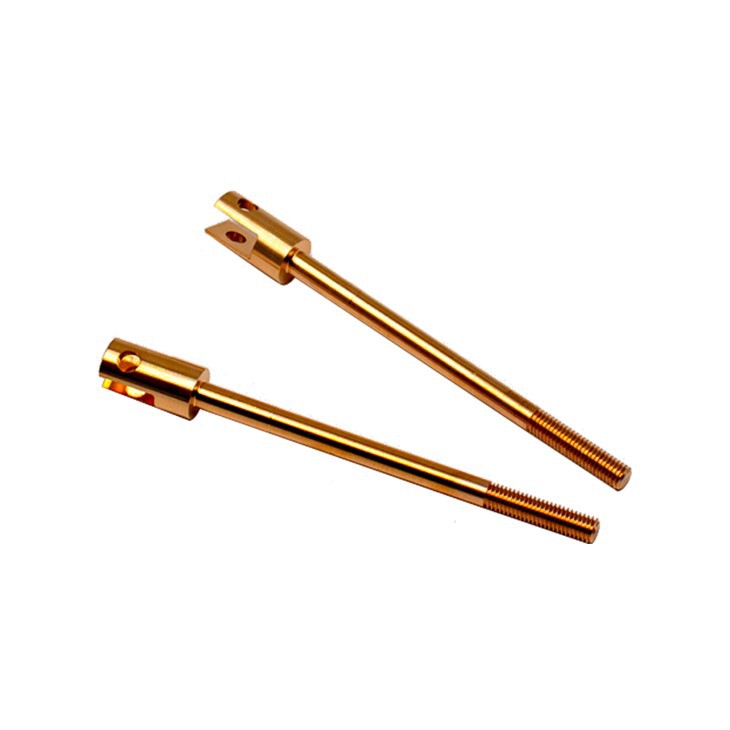

Product Description
Tin bronze is a type of bronze alloy that contains between 5% and 25% tin by weight, which imparts improved corrosion resistance, strength, and wear resistance to the material. Due to its excellent mechanical properties, CNC machined bronze parts are widely used in the production of various components, such as bearings, gears, and valve parts, in marine, automotive, and aerospace industries.
The CNC machining process for tin bronze parts involves using computer-controlled machines to remove material from a workpiece in a predetermined shape and size. This method provides high precision and accuracy, ensuring that the final product meets the desired specifications. Moreover, CNC machining can produce complex shapes and features.
Our Capabilities
Our company is a precision CNC machining factory that has been in business for 18 years, since 2005. With over 40 CNC machines, we have the capability to machine more than 90 types of metals and plastics and can offer 30 types of surface treatments. Our machining tolerances can reach as low as +/- 0.0004 inches (0.01mm), making our operations highly efficient and precise. We offer additional services such as electric discharge wire cutting, gun drilling, grinding, tube and rod bending, and more. Our expertise and experience in precision CNC machining, coupled with our extensive range of capabilities, make us a reliable and trusted partner for all our customer's manufacturing needs.

Product Feature
Bronze, an alloy composed mainly of copper and tin, has been used for thousands of years due to its strength, durability, and aesthetic appeal. One particular type of bronze, known as tin bronze or commonly referred to as "bell metal," is recognized for its superior mechanical properties when compared to other types of bronze.
Tin Bronze:
1. Composition: Tin bronze consists of 90% copper and 10% tin.
2. Hardness: The hardness of tin bronze ranges from 70 to 88 HRB (Rockwell hardness B scale).
3. Tensile Strength: The tensile strength of tin bronze ranges from 300 to 550 MPa (Megapascal).
4. Yield Strength: The yield strength of tin bronze ranges from 120 to 510 MPa.
5. Ductility: Tin bronze has a moderate level of ductility, with an elongation rate of 10 to 25% under tension.
Comparative Analysis:
1. Phosphor Bronze: Phosphor bronze is another type of bronze alloy that is commonly used in manufacturing. It contains copper, tin, and up to 0.5% phosphorus. Compared to CNC machined bronze parts, phosphor bronze has less tin and more phosphorus, resulting in a harder and more corrosion-resistant alloy.
2. Brass: Brass is a copper alloy primarily composed of copper and zinc. It is similar to bronze in terms of strength and durability but has a yellow-gold appearance due to the high amount of zinc content. Brass is also comparable to tin bronze in terms of ductility and malleability, making it an excellent material for decorative purposes.
Product display
|
|
|
|


Application
1. Marine Industry
Marine industry applications extensively use tin bronze components, mainly for their exceptional corrosion resistance and high strength. Boat propellers, shafts, and bearings are commonly made up of tin bronze.
2. Mining Industry
Mining equipment often uses tin bronze parts because of their reliable and durable mechanical properties. Heavy equipment bucket bushings and wear plates made of tin bronze have high corrosion resistance and excellent wear and tear resistance.
3. Chemical Processing Industry
Tin bronze products are commonly used in chemical processing applications because of their resistance to chemicals and their ability to withstand high temperatures. These characteristics make them ideal for manufacturing pressure vessels, heat exchangers, and various parts used in chemical processing machinery.
4. Aerospace Industry
Despite being in the aviation industry, there are still a few areas where tin bronze components come in handy. For instance, helicopter rotor hub bearings, landing gear bearings, and other critical parts of the aircraft can be made of tin bronze.
5. Construction Industry
CNC Machined bronze parts are occasionally employed as a structural element in the construction industry. The metal can be used for door and window hardware, electrical fittings, pipes, and other parts that may require corrosion resistance.
Product process

Packaging and shipping

FAQ
Q: Are you a trading company or manufacturer?
A: We are a manufacturer.
Q: When was your company founded?
A: Our company was founded in 2005.
Q: How long can you reply after getting RFQ?
A: Within 24 hours.
Q: Can you provide a sample? Is it free or extra?
A: Yes, We can. Just need some sample costs.
Q: Can you sign NDA (Non-disclosure agreement)?
A: Yes, We can.
Q: Deliver time of mass production?
A: Usually 25-35 days, it depends.