


Product Description
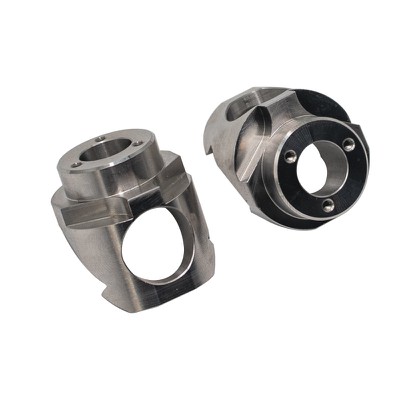
CNC milled turned galvanized steel parts are widely used in various industries due to their exceptional durability, strength, and efficiency. These parts are produced with the help of Computer Numerical Control (CNC) machines that ensure precision, accuracy, and consistency of each component.
One of the most significant advantages is their excellent resistance to corrosion. Galvanization is a process that involves coating the steel surface with a protective layer of zinc, thereby enhancing its resistance to rust and other forms of corrosion. This makes these parts ideal for use in outdoor environments, where exposure to harsh weather conditions and moisture is common.
Moreover, they are highly versatile and can be used for a wide range of applications, including automotive, construction, aerospace, and industrial manufacturing. They can be designed and customized to meet specific requirements, ensuring they meet the needs of various industries and applications.
Another benefit is that they are cost-effective and have a longer lifespan than conventional parts. This is because the galvanized zinc layer protects the underlying steel from premature rust and corrosion, thereby boosting the overall lifespan of the parts and reducing replacement costs.
Our Capabilities
Our company is a precision CNC machining factory that has been in business for 18 years, since 2005. With over 40 CNC machines, we have the capability to machine more than 90 types of metals and plastics and can offer 30 types of surface treatments. Our machining tolerances can reach as low as +/- 0.0004 inches (0.01mm), making our operations highly efficient and precise. We offer additional services such as electric discharge wire cutting, gun drilling, grinding, tube and rod bending, and more. Our expertise and experience in precision CNC machining, coupled with our extensive range of capabilities, make us a reliable and trusted partner for all our customer's manufacturing needs.

Product Feature
In the machining industry, several types of steel alloys are commonly used. Each alloy has its specific characteristics, and understanding those characteristics is important in making an informed decision when choosing the best-suited alloy for a particular application. Here are some of the most common types of steel alloys used in the industry and their features:
1. Carbon Steel
Carbon steel is an alloy of iron and carbon, with a carbon content ranging from 0.05% to 2.0% by weight. It is the most widely used steel alloy due to its low cost and high machinability.
Advantages:
- High weldability
- Low cost
- Easily machinable
Disadvantages:
- Can corrode easily
- Limited strength compared to other alloys
2. Stainless Steel
Stainless steel is a popular alloy of steel that contains a minimum of 10.5% chromium by mass. The addition of chromium gives stainless steel its distinctive shiny appearance and excellent corrosion resistance properties.
Advantages:
- High corrosion resistance
- Heat resistance
- Hygienic and easy to clean
Disadvantages:
- More expensive than other alloys
- Low ductility
3. Tool Steel
Tool steel is a type of alloy that is specifically designed for cutting, shaping, and molding materials. It contains significant quantities of tungsten, molybdenum, and cobalt.
Advantages:
- High hardness and toughness
- Great wear resistance
- Reduces maintenance costs
Disadvantages:
- More challenging to machine than other alloys
- Expensive
4. Alloy Steel
Alloy steel is a type of steel that contains other elements besides iron and carbon. The additional elements often added are chromium, nickel, and molybdenum, among others.
Advantages:
- Excellent corrosion resistance
- High strength
- Improved toughness
Disadvantages:
- More expensive than carbon steel
- Limited availability
Product display
 |
 |
 |
Process
Galvanization, also known as zinc coating, is the process of coating iron or steel with a layer of zinc to prevent rusting and corrosion. The basic operation process of galvanization involves several steps:
Step 1:
Surface Preparation – The first step in the galvanizing process is preparing the surface by removing any contaminants such as oil, rust or mill scale.
Step 2:
Pickling – The second step is pickling, which involves dipping the steel into a bath of diluted acid to remove any remaining contaminants.
Step 3:
Fluxing – The third step is fluxing, which involves dipping the steel into a bath of flux to protect the surface from oxidation during the galvanizing process.
Step 4:
Galvanizing – The fourth and final step is dipping the steel into a bath of molten zinc at a temperature of around 450°C. The zinc reacts with the steel to form a protective coating on the surface.
After the process is complete, the steel is allowed to cool and the zinc coating is inspected for uniformity and thickness. One of the most significant changes in appearance after galvanization is the surface texture. The zinc coating may appear slightly bumpy or spotty, but this is a normal characteristic of the process and does not affect the functionality of the coating.
Application
CNC milled turned galvanized steel parts finds its application across a wide range of industries such as construction, agriculture, marine, and defense. The process is used for manufacturing various parts such as brackets, hinges, angles, clamps, nuts, bolts, and other components.
In the construction industry, they are used in the production of building hardware like door frames, window frames, steel beams, and other structural components. They help to prevent corrosion and increase the lifespan of the building. The parts produced are of high quality, making them reliable and durable.
The agriculture industry uses them for manufacturing agricultural equipment like plows, cultivators, and planting machines. They are known for their resistance to rust and corrosion, making them ideal for use in outdoor equipment.
In the marine industry, CNC milled turned galvanized steel parts are used for the manufacturing of boats, ships, and maritime structures. These parts are essential in ensuring that marine vessels are structurally sound and can withstand the harsh marine environment.
Product process

Packaging and shipping

FAQ
Q: Are you a trading company or manufacturer?
A: We are a manufacturer.
Q: When was your company founded?
A: Our company was founded in 2005.
Q: How long can you reply after getting RFQ?
A: Within 24 hours.
Q: Can you provide a sample? Is it free or extra?
A: Yes, We can. Just need some sample costs.
Q: Can you sign NDA (Non-disclosure agreement)?
A: Yes, We can.
Q: Deliver time of mass production?
A: Usually 25-35 days, it depends.